Why Situational Leadership Matters More Than Ever in Education
Education is one of the most emotionally charged, rapidly shifting, high-stakes environments on the planet.
Your people are balancing:
⭐ Relentless accountability pressure from parents
⭐ Governors
⭐ Ofsted curriculum reform
⭐ Behaviour challenges
⭐ Recruitment and retention issues
⭐ The daily emotional weight of shaping young lives
A static leadership style breaks under that pressure.
A situational leader, however— can meet people where they are… and elevate them to where they need to go.
This isn’t just management. This is transformational influence in action.
Hersey and Blanchard observed something profound:
People don’t need the same style of leadership at every stage of their development. Every team member sits somewhere on the development spectrum:
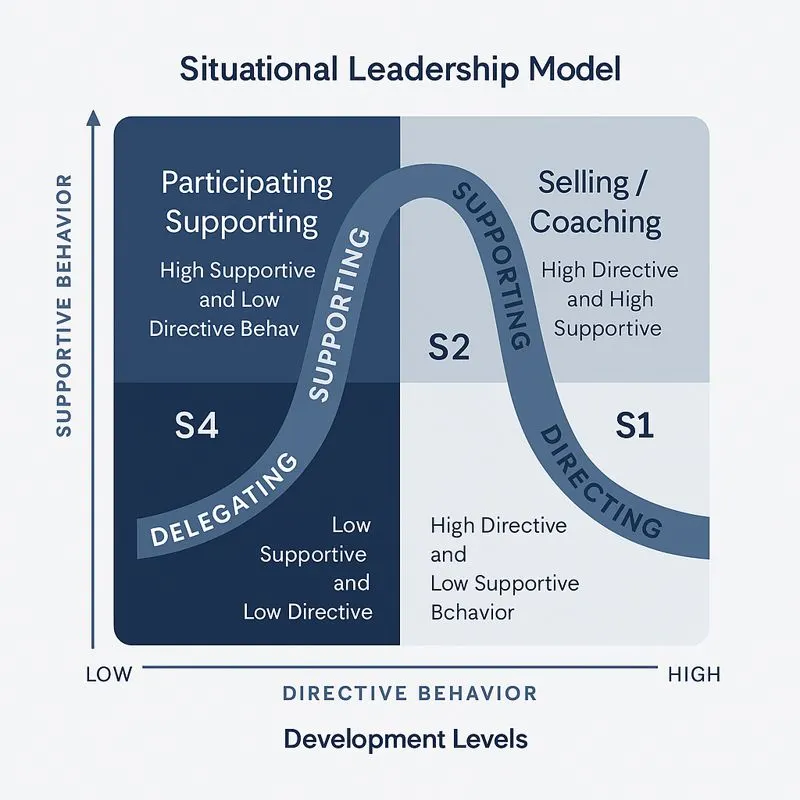
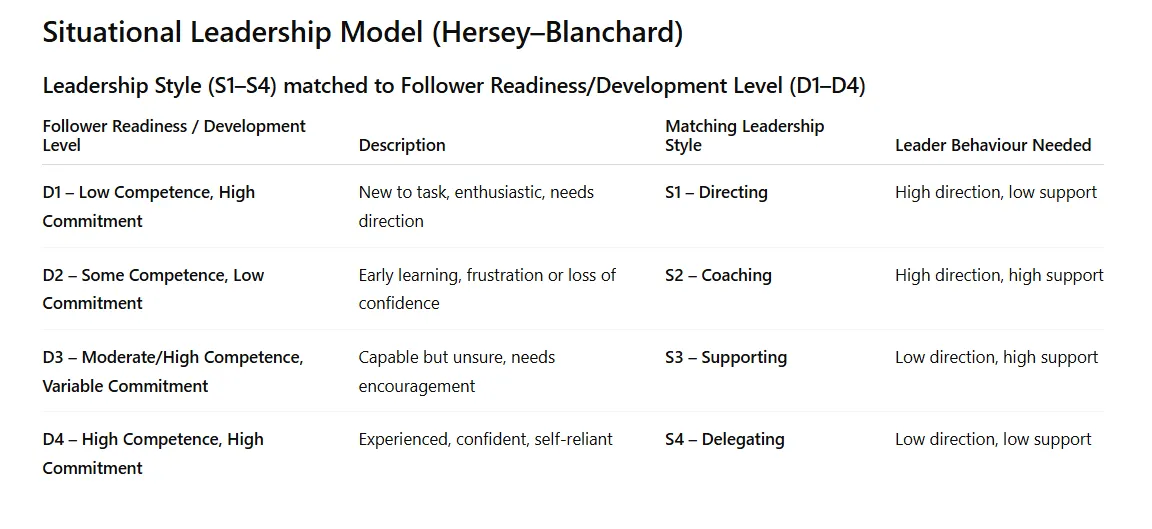
The Heart of Situational Leadership: It’s All About Development Level
D1 – Enthusiastic Beginner
They’re motivated, excited, full of potential… but lack experience. They need clear direction and lots of support.
D2 – Disillusioned Learner
Energy dips. Reality hits. They’re unsure, frustrated, overwhelmed. They need clarity, encouragement, and belief.
D3 – Capable but Cautious Performer
They CAN do it—but doubt themselves. They need confidence, reinforcement, and autonomy.
D4 – Self-Reliant Achiever
Motivated. Competent. Ownership-driven. They need freedom, trust, and space.
The magic? Your leadership transforms depending on where THEY are—not where YOU are.
This is emotional intelligence in motion.
⭐ The Four Leadership Styles: Lead with Precision
Once you’ve identified the development level, you match it to the leadership style that unlocks performance.
S1 – Directing (High Direction, Low Support)
Perfect for D1 staff. You give clarity, instructions, structure, timelines. Not micromanaging—empowering through clarity.
It’s not about controlling people. It’s about giving them the roadmap to win.
S2 – Coaching (High Direction, High Support)
Ideal for D2 staff—those in the struggle phase. You guide AND motivate. You encourage AND structure. You connect emotionally AND practically.
This is where true leadership presence shines.
S3 – Supporting (Low Direction, High Support)
This fits your D3 team members. They have the skill… They just need belief.
Your role becomes:
✔ listening
✔ facilitating
✔ empowering
✔ asking great coaching questions
This is where leaders create ownership.
S4 – Delegating (Low Direction, Low Support)
For D4 stars. You trust them. You release them. You step out of the way.
This is where capacity builds— and where schools create future leaders.
⭐ Why Education Leaders Struggle With This Model (and How to Fix It)
Most leaders default to ONE style:
✔ The “tell” leader
✔ The “cheerleader” leader
✔ The “coach” leader
✔ The “hands-off” leader
But here’s the truth bomb:
When your leadership style stays the same, performance doesn’t.
# If you coach someone who desperately needs direction? They spiral.
# If you delegate to someone who isn’t ready? They drown.
# If you direct a D4 achiever? They disengage.
# Situational leadership requires awareness, agility, and courage—because you must be willing to change YOUR behaviour first.
The greatest leaders are the most adaptable humans in the room. This model turns that philosophy into a practical framework.
⭐ How to Apply Situational Leadership in Your School or Trust
Here’s the step-by-step strategy I coach leaders on:
1️⃣ Diagnose before you lead ask: What is their competence right now? How motivated are they? What’s their current emotional state? Don’t assume. Don’t guess. Observe. Ask. Listen.
2️⃣ Match the style to the moment. The goal is not comfort—it’s effectiveness.
3️⃣ Stretch, don’t strain shift in small, intentional steps.
4️⃣ Review and adjust - development levels change. People evolve. Your leadership must evolve with them.
5️⃣ Celebrate growth when your staff rise a level — name it. Identity follows recognition.
⭐ The Bottom Line: Situational Leaders Create Empowered Cultures
# You want your staff to take ownership? Start giving the right leadership at the right time.
# You want confident middle leaders? Start matching style to development.
# You want a resilient school culture? Become the leader who adapts instead of reacts.
# Because leadership isn’t about being everything to everyone. It’s about becoming exactly what each person needs to succeed.
When you master this, you don’t just improve performance— you elevate human potential… and that elevates the entire organisation.